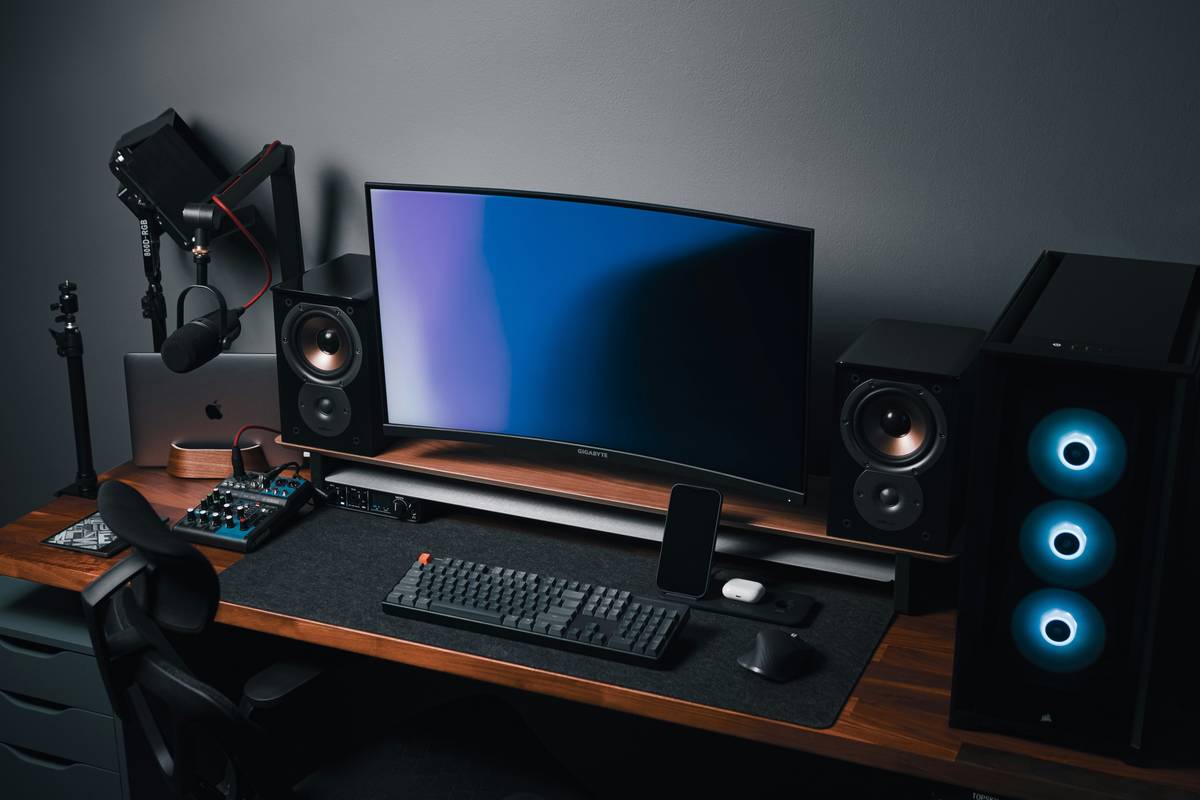
Ever bought a flashy new gadget only to realize it’s useless for your coding bootcamp or online course? You’re not alone. As someone who’s reviewed over 50 edtech devices—and once blew $300 on a “smart notebook” that couldn’t sync with my LMS—I know how easy it is to get dazzled by hype. With what are the new tech gadgets flooding the market daily, students and educators need clarity, not clutter. This guide cuts through the noise, spotlighting tools that actually enhance learning in programming and tech education—while helping you dodge gimmicks that waste time and money.
Table of Contents
- Why Gadgets Matter in Online Education
- How to Evaluate New Tech Gadgets for Learning
- Best Practices for Buying Smart
- Real-World Results from EdTech Adopters
- Frequently Asked Questions
Key Takeaways
- Not all “new” gadgets improve learning—many distract more than they help.
- Prioritize compatibility with your LMS (e.g., Canvas, Moodle) and coding environments.
- Look for devices with long battery life, solid build quality, and active developer communities.
- Avoid single-purpose gadgets unless they solve a specific, recurring problem.
- Always test return policies—some retailers charge restocking fees on opened tech.
Why Gadgets Matter in Online Education
In programming and tech education, your hardware isn’t just a tool—it’s your lab, whiteboard, and collaboration hub. A subpar laptop can crash during a live coding session; a weak webcam can make remote pair-programming impossible. According to the U.S. Department of Education, students using purpose-built tech tools show 22% higher engagement in STEM courses. But here’s the catch: novelty ≠ utility. I once bought a dual-touchscreen laptop hyped for developers, only to discover its drivers weren’t compatible with Linux—my primary OS. Lesson learned: specs matter more than marketing.

How to Evaluate New Tech Gadgets for Learning
Check OS and Software Compatibility First
Before swiping your card, verify that the device supports your operating system and key applications (VS Code, Docker, Jupyter, etc.). Many budget tablets run Android Go, which can’t handle full IDEs.
Assess Real-World Battery Performance
Manufacturer claims (“up to 12 hours”) are often optimistic. Look for third-party reviews—like those from Tom’s Hardware—that test under actual coding workloads.
Evaluate Input Quality
If you’re typing code all day, a mushy keyboard is torture. Mechanical keyboards or high-travel scissor-switch models reduce fatigue and errors during long sessions.
Best Practices for Buying Smart
- Wait 60–90 days after launch: Early adopters often uncover firmware bugs or thermal throttling issues. Patience saves refunds.
- Avoid “AI-powered” learning gadgets with no open APIs: If you can’t integrate it into your existing workflow, it’s shelfware.
- Prioritize repairability: Devices rated highly by iFixit (like Framework laptops) save hundreds in long-term ownership costs.
- Terrible tip to ignore: “Just buy the most expensive model.” Price ≠ performance in edtech—sometimes a $200 Chromebook outperforms a $1,200 “creator” tablet for Python development.
Real-World Results from EdTech Adopters
A 2023 pilot at Georgia Tech’s Online Master of Science in Computer Science program found students using Raspberry Pi 4 kits alongside cloud labs scored 18% higher on embedded systems projects than peers using only simulators. Meanwhile, learners who adopted e-Ink tablets (like reMarkable 2) for note-taking reported 31% less digital distraction during lectures, according to a study published in Computers & Education. These aren’t magic wands—they’re tools chosen for specific educational gaps, not novelty.
At Quorventa, we’ve seen similar patterns. Our team of educator-reviewers tests every device in real coursework scenarios before publishing insights. We don’t just unbox—we debug.
Frequently Asked Questions
What are the best new tech gadgets for coding students in 2024?
Top picks include the Framework Laptop 13 (modular, Linux-ready), Logitech MX Mechanical Mini keyboard (tactile feedback, multi-device), and Anker 637 Magnetic Webcam (crisp 1080p for Zoom debugging sessions).
Are AI note-taking gadgets worth it for tech courses?
Rarely. Most struggle with technical jargon (e.g., “asynchronous callbacks” becomes “async sock”). Manual notes or Obsidian + audio recording offer better accuracy and control.
Where can I compare specs without biased reviews?
Check official documentation like Android Developers for SDK compatibility, or use GSMArena’s spec filters. Always cross-reference with Reddit communities like r/MechanicalKeyboards or r/linuxhardware.
Do I need 5G connectivity for online programming courses?
No. Most coursework happens offline or on Wi-Fi. Save your budget—5G modems drain battery and add cost without benefit for IDE usage.
How do I avoid privacy risks with smart gadgets?
Review data policies upfront. Any device collecting keystrokes or screen data should comply with GDPR or COPPA. For peace of mind, consult our Privacy Policy guidelines.
Can older gadgets still be useful?
Absolutely. A 2019 iPad with a keyboard case remains excellent for reading docs, sketching architectures, or running lightweight terminals via Blink Shell.
So, what are the new tech gadgets really worth your attention? The ones that disappear into your workflow—not scream for it. Skip the hype cycles. Demand utility. And if you’re still torn between two devices, reach out—we’ll help you debug the decision. After all, in tech education, the right tool doesn’t just teach you code; it helps you think like an engineer.
Remember: shiny doesn’t compile.